Big Sky Ski Resort Review 2026
Big Sky is one of the largest ski resorts in the United States, with around 5,800 acres of terrain, famously short lift lines and the dramatic Lone Peak at its summit. It serves intermediates and experts brilliantly while staying far calmer than the big Colorado names. The honest trade off is a modern, spread out village and a remote setting, which suit skiing first travelers more than those after a quaint town.
By the Ski Resorts for Kings editorial team · Last reviewed May 2026
Mountain stats at a glance
| Base altitude | around 2,290 m at Mountain Village, about 7,500 feet |
|---|---|
| Top lift | around 3,400 m at Lone Peak, reached by the tram |
| Vertical | roughly 1,300 m, about 4,350 feet |
| Skiable terrain | around 5,800 acres, among the largest in the United States |
| Run split | roughly 15 percent beginner, 25 percent intermediate, 60 percent advanced and expert |
| Average snowfall | around 400 inches a season of dry Montana snow |
| Season | roughly late November to mid April |
| Nearest airport | Bozeman, roughly a 1 hour transfer |
| Day pass | walk up tickets run high, so most ski on an Ikon Pass |
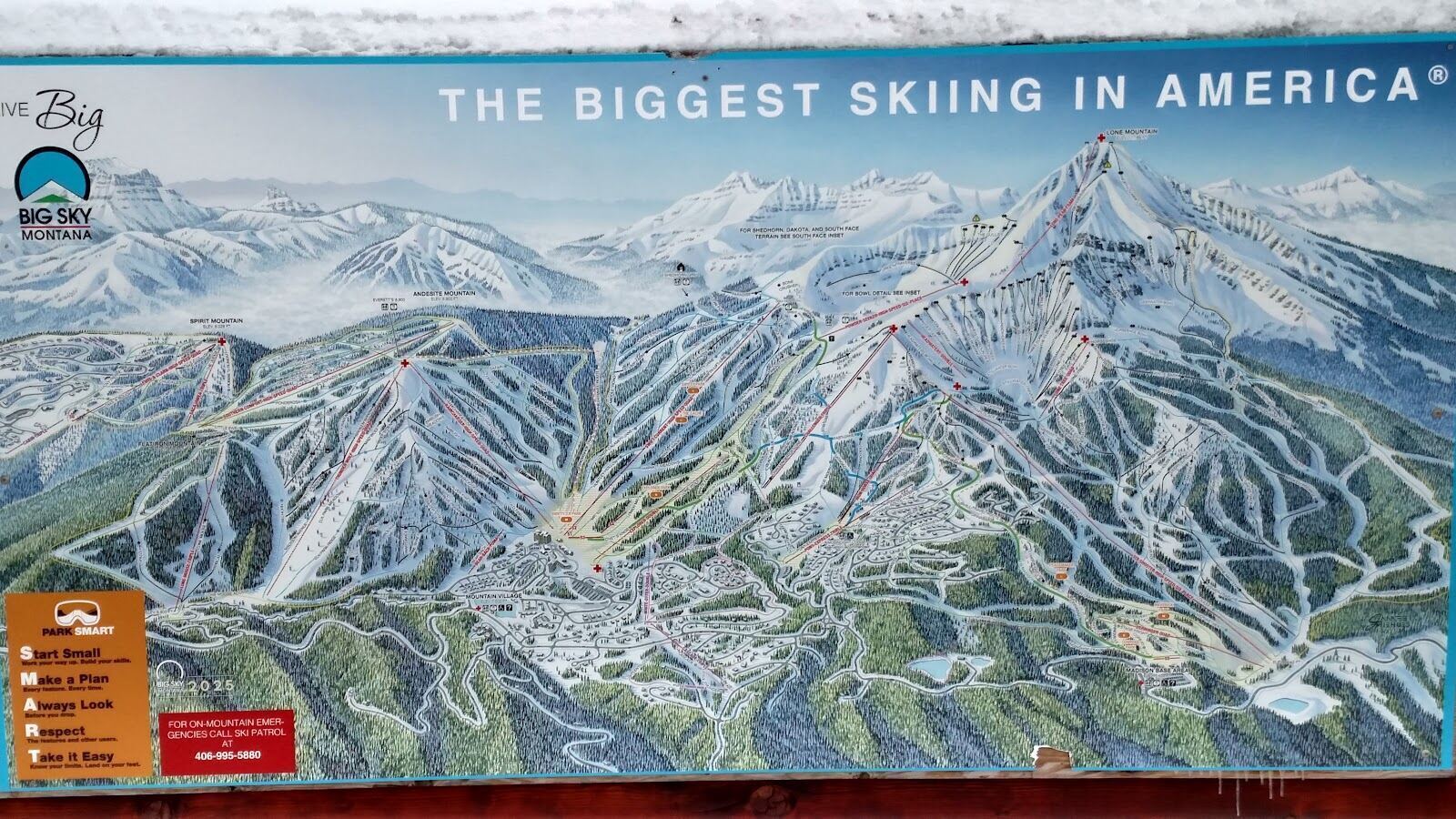
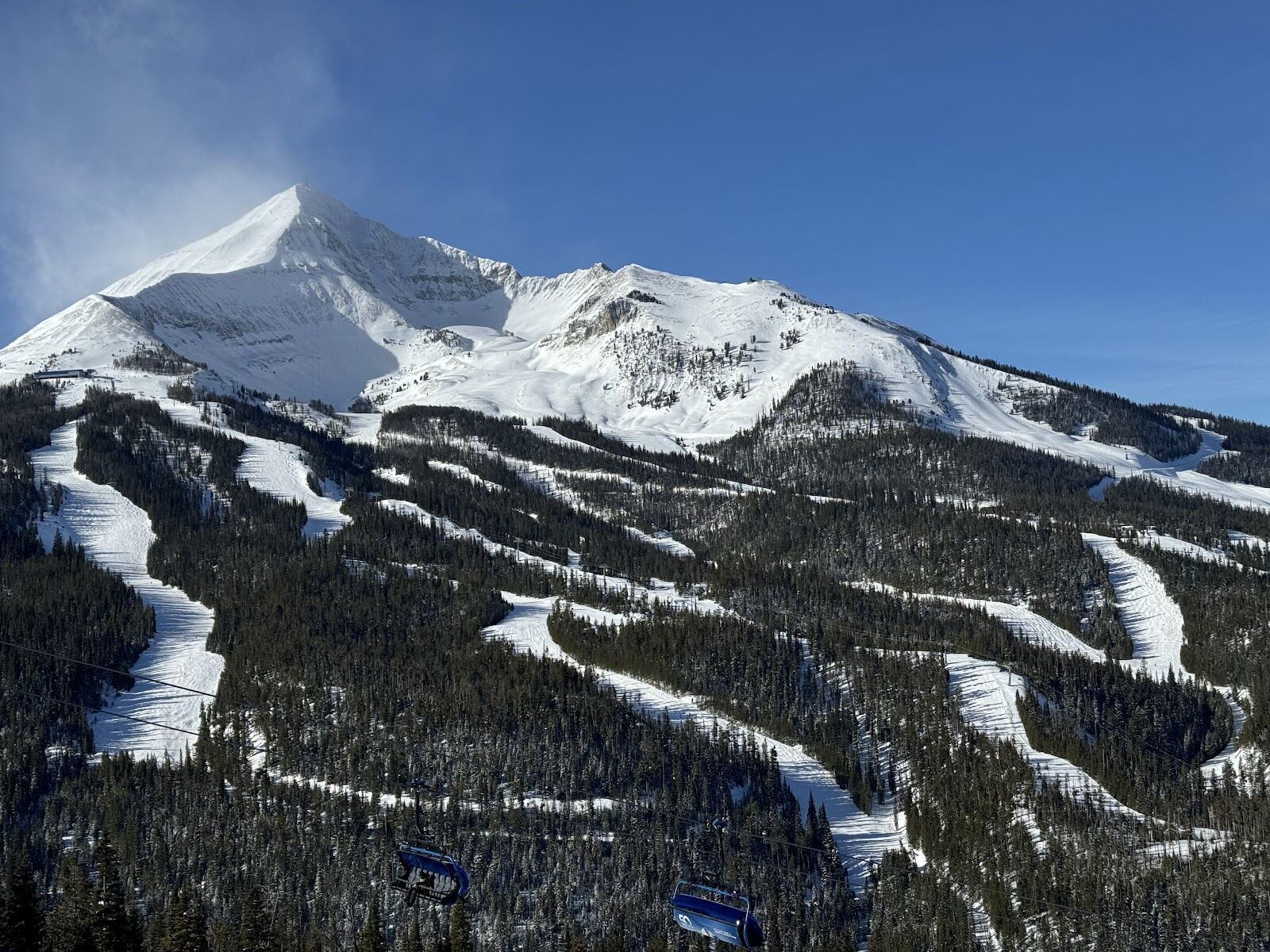
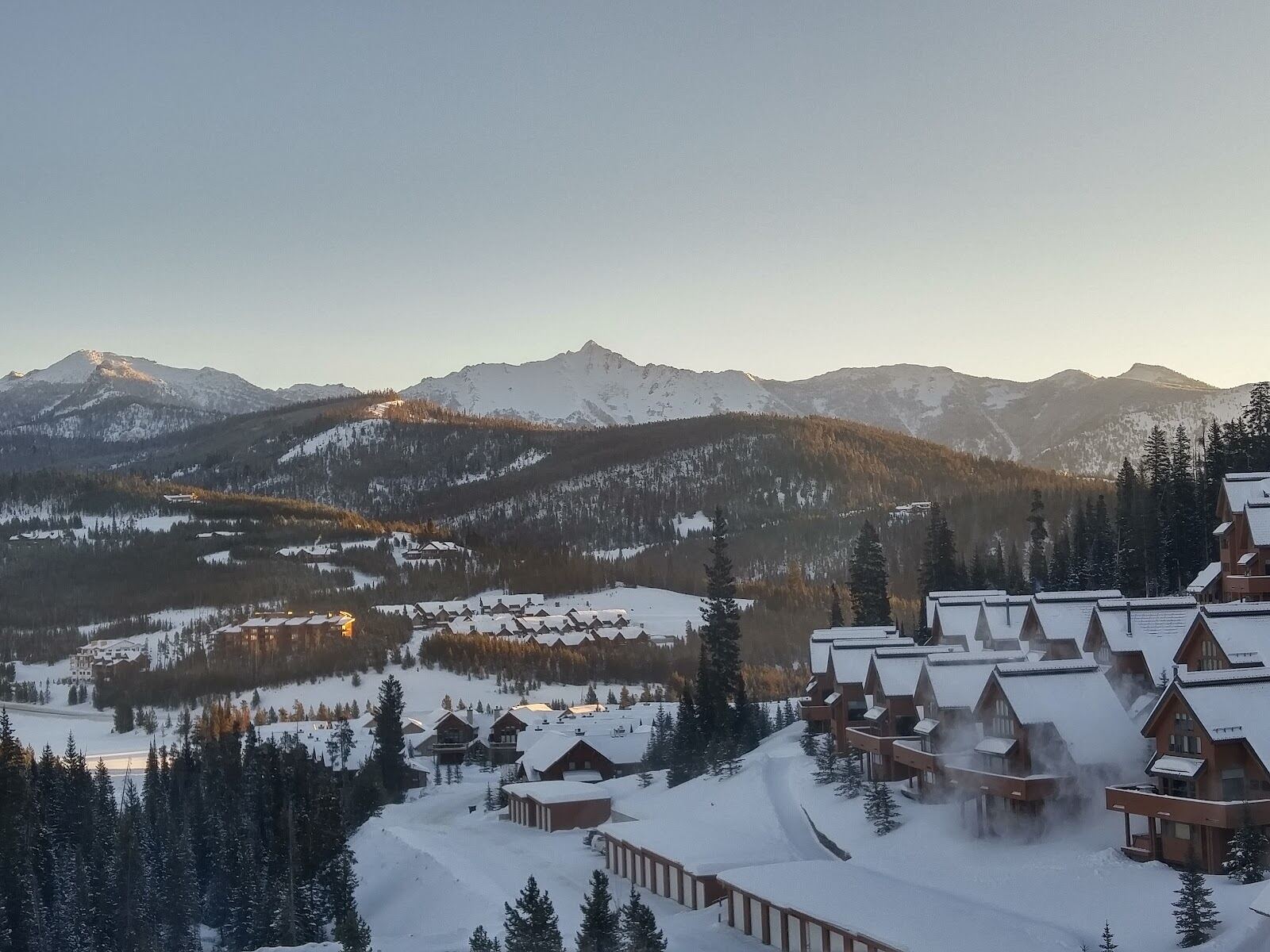
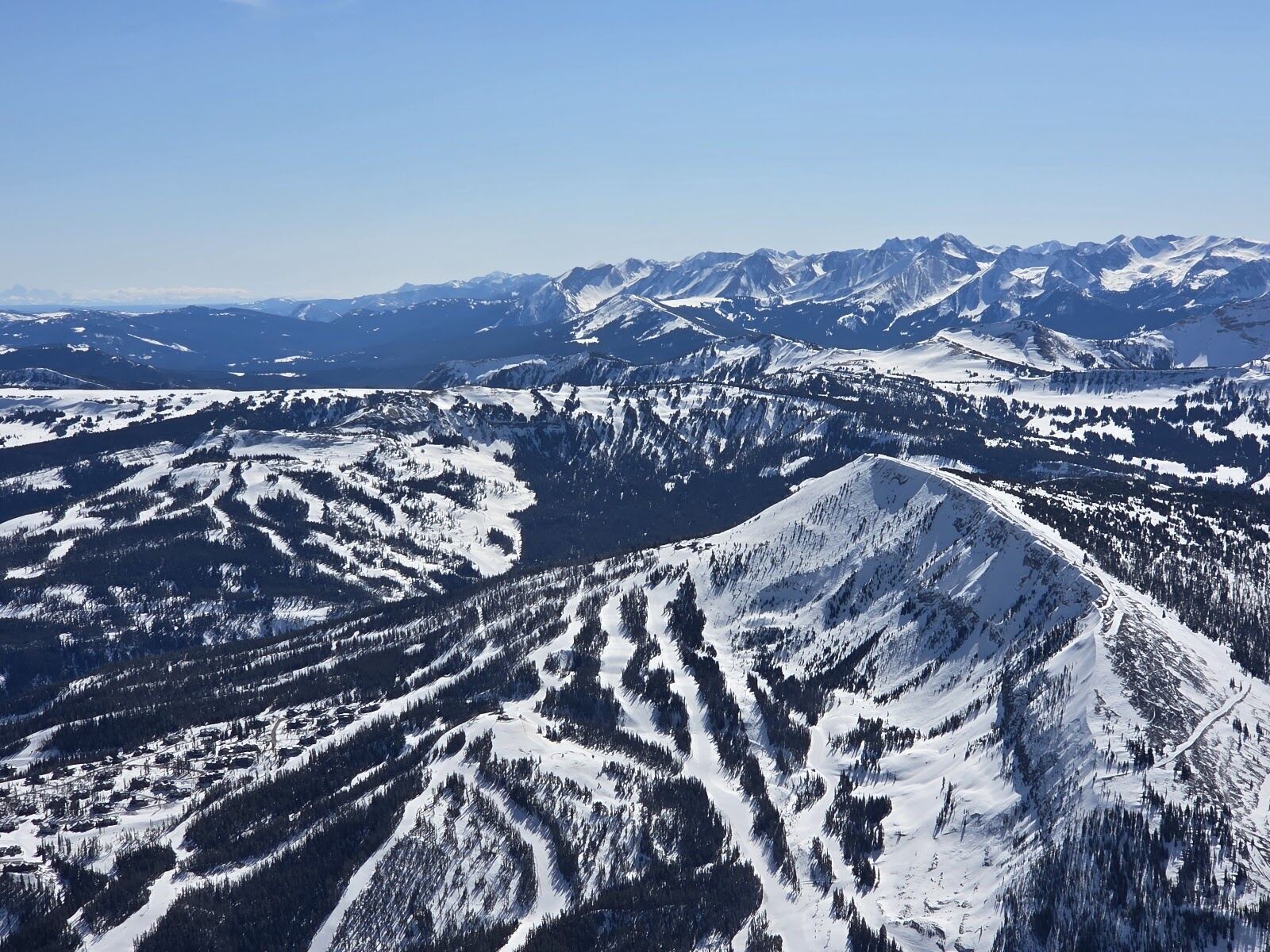
Photos via Google. Contributed by Brock Barczyk, John James, RI, Tony D.
Who it suits
The skiing
Big Sky is defined by scale and space. Around 5,800 acres spread across several linked mountains mean you can ski all week and not repeat yourself, and the lift system rarely produces the long lines that plague more famous resorts. For intermediates this is close to ideal: long, varied, well groomed runs with room to breathe.
Lone Peak is the dramatic centerpiece. The tram climbs to a summit of around 3,400 m and a network of steep couloirs and exposed faces that are strictly for confident experts, with the views from the top among the best in American skiing. Below and around it sits a huge amount of advanced bowl and tree terrain that holds powder long after the crowds have moved on.
What ties it together is the uncrowded feel. Even in peak weeks Big Sky stays calmer than the Colorado giants, so the experience on the snow is more relaxed and the value of each lift ride higher. If you measure a resort by runs skied per day rather than apres bars per street, Big Sky scores very highly.
The village
Big Sky's Mountain Village is modern, comfortable and convenient, with ski in ski out hotels, condos, restaurants and the lift base all close together. It has been growing and upgrading steadily, so facilities are good, but it is a purpose built resort base rather than a historic alpine town and it lacks the pedestrian charm of a European village or a place like Telluride.
Apres ski and dining are perfectly good without being a major draw, and the nightlife is low key, which suits families and serious skiers more than party seekers. The wider Big Sky area is spread out across the valley, so having a plan for transport and dining helps. Many visitors also build in a day trip to nearby Yellowstone, which is a genuine bonus.
The honest trade off is remoteness and atmosphere. You come to Big Sky for the mountain, the space and the snow, not for a buzzing town. For the right traveler that is exactly the appeal.
Where to stay
For the easiest week, stay ski in ski out in Mountain Village near the lifts. For more space or better value, look at lodging lower in the Big Sky area and use shuttles, though a car is useful given how spread out the valley is. Our guide to how to book a catered chalet covers what to check before you commit.
Lift pass prices and how to save
Big Sky is on the Ikon Pass, and the economics favor planning ahead: a walk up day ticket is expensive, while an Ikon product bought in advance covers Big Sky and many other resorts for far less per day. For more than a couple of days, an Ikon pass or multi day ticket is the sensible choice. Note that riding the Lone Peak Tram can require a separate paid reservation at peak times, so check the current policy before counting on summit laps.
Read our Ikon Pass explained guide first, then compare current prices and buy ahead through our lift pass partner.
Lessons and ski hire
Big Sky's ski and snowboard school is well regarded, with good children's programs and private instruction, and the quiet slopes make it a calm place to learn. Book lessons early for holiday weeks, reserve gear in advance, and respect the altitude on day one. Strong skiers can book a guide to get the most out of Lone Peak's expert terrain safely.
Arrange lessons through our lessons partner and gear through our ski hire partner.
Getting there
Big Sky is more accessible than its remote feel suggests. Bozeman Yellowstone International is only about an hour away by road, and its winter flight schedule has expanded, so direct connections from major hubs are increasingly common. A shared shuttle or private transfer from Bozeman is the usual approach, though a rental car is worth considering given how spread out the Big Sky valley is.
Book an airport transfer through our transfer partner, and sort cover through our travel insurance partner before you travel.
When to go
January and February deliver the coldest, driest Montana powder and the best chance of deep days, while March brings longer daylight and softer spring snow in the afternoons. Big Sky is noticeably quieter than the marquee Colorado resorts even at peak times, so crowds are less of a concern, but midweek is still the calmest and usually the best value. The holiday weeks remain the busiest and priciest.
The honest bottom line
Big Sky is one of the biggest, most uncrowded big mountain resorts in the United States, pairing vast intermediate cruising with genuinely serious expert terrain off Lone Peak. For intermediates, experts and mixed ability groups who value scale, space and short lift lines, ideally on an Ikon Pass, it is one of the best choices in North America. Travelers who want a quaint village, lively nightlife or a quick, simple journey should look elsewhere. For skiing first families and groups, it is hard to beat.
If you want this trip priced by specialists, tell us your dates and budget below and we will route your brief to operators who know Big Sky.
Nearby alternatives
Staying in the area but want to compare? Consider Bridger Bowl near Bozeman for steep, no frills local terrain and value, Jackson Hole for legendary steeps and a real town a few hours south, and Whitefish for a relaxed, friendly Montana week.
Common questions
How big is Big Sky ski resort?
Big Sky has around 5,800 acres of skiable terrain, making it one of the largest ski resorts in the United States. The terrain spreads across several connected mountains topped by Lone Peak, so even on busy weeks the mountain rarely feels crowded and lift lines stay short.
Is Big Sky on the Epic or Ikon Pass?
Big Sky is on the Ikon Pass. Walk up day tickets are expensive, so most visitors ski on an Ikon product or a multi day ticket bought in advance. The Lone Peak Tram can require a separate paid reservation in peak periods, which is worth checking before you go.
Is Big Sky good for beginners and families?
Yes, it is a good family mountain despite its big reputation. There is plenty of gentle and intermediate terrain lower down, a strong ski school and a modern, well run base, while the truly extreme terrain off Lone Peak is easy to avoid. Short lift lines make a family week relaxed.
How do you get to Big Sky?
Bozeman Yellowstone International is only about an hour away by road, which is close for a resort of this size. A shared shuttle or private transfer is the usual approach, and the airport has grown its winter flight schedule, so direct connections are increasingly common.
How challenging is Lone Peak?
Very. The Lone Peak Tram delivers you to a summit of around 3,400 m and a web of steep couloirs, chutes and exposed faces that are for strong experts only. The rest of the resort is far more forgiving, which is what makes Big Sky work for a mixed ability group.
When is the best time to ski Big Sky?
January and February bring the coldest, driest Montana powder, while March offers longer days and softer afternoon snow. Big Sky is quieter than the marquee Colorado resorts even at peak times, so the crowd trade off is gentler, but midweek is still the calmest and best value.