Vail Ski Resort Review 2026
Vail is the most complete big mountain resort in Colorado, pairing vast intermediate terrain on the front side with the legendary Back Bowls and a polished pedestrian village. It is the flagship of the Epic Pass, which is the only sensible way to ski it given sky high walk up lift prices. The terrain genuinely suits almost everyone, but the cost of a Vail trip sits firmly at the premium end.
By the Ski Resorts for Kings editorial team · Last reviewed May 2026
Mountain stats at a glance
| Resort altitude | around 2,500 m in Vail Village |
|---|---|
| Top lift | around 3,530 m at the top of the Back Bowls |
| Vertical | roughly 1,000 m, about 3,450 feet |
| Skiable terrain | around 5,300 acres, one of the largest in North America |
| Run split | roughly 18 percent green, 29 percent blue, 53 percent advanced and expert |
| Lifts | around 30, including high speed gondolas and chairs |
| Season | roughly mid November to mid April |
| Nearest airport | Denver, roughly a 2 hour to 2 hour 30 minute transfer, or Eagle County around 45 minutes |
| Day pass | a walk up day pass can exceed $250, so almost everyone skis on an Epic Pass |
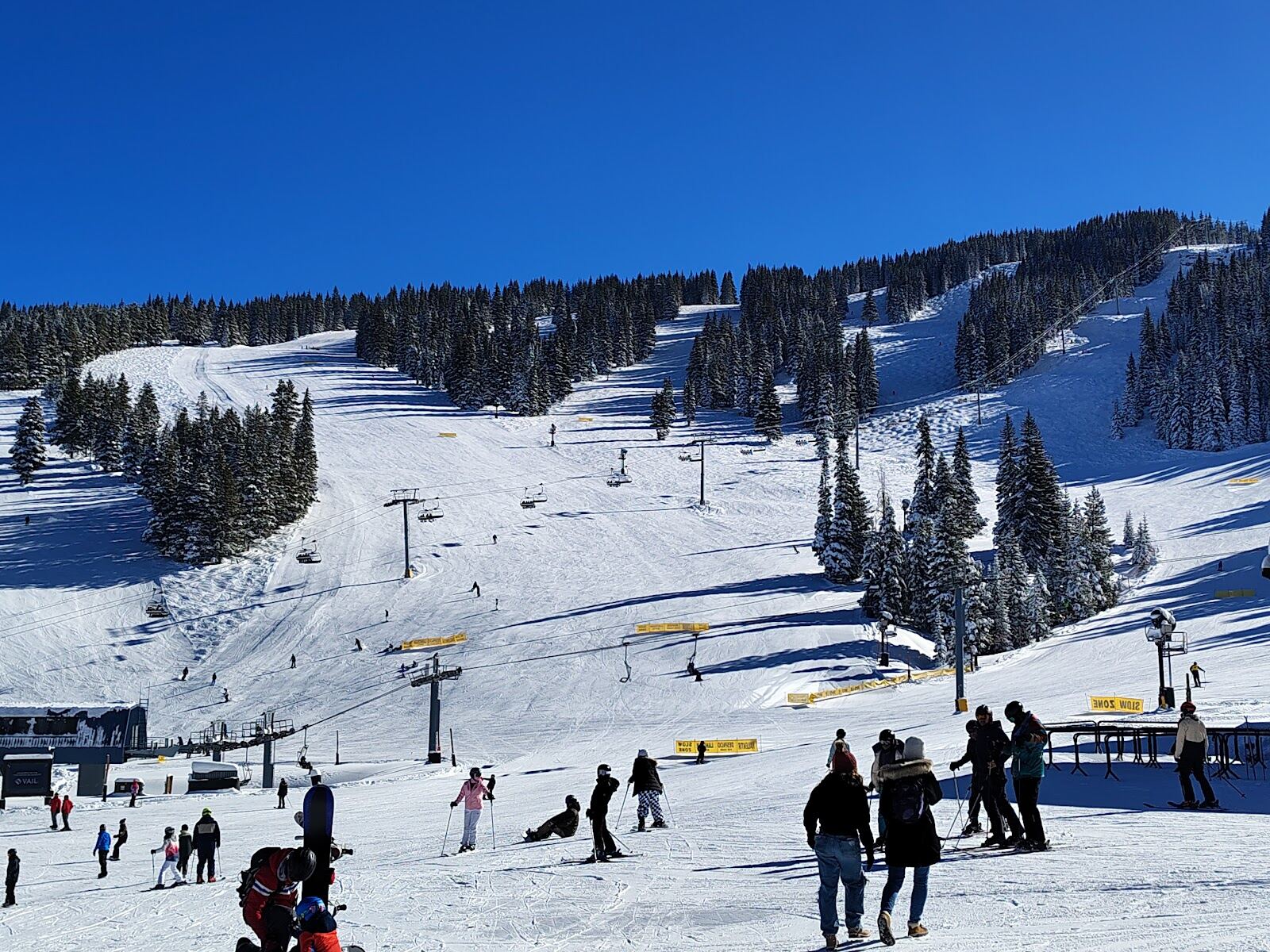
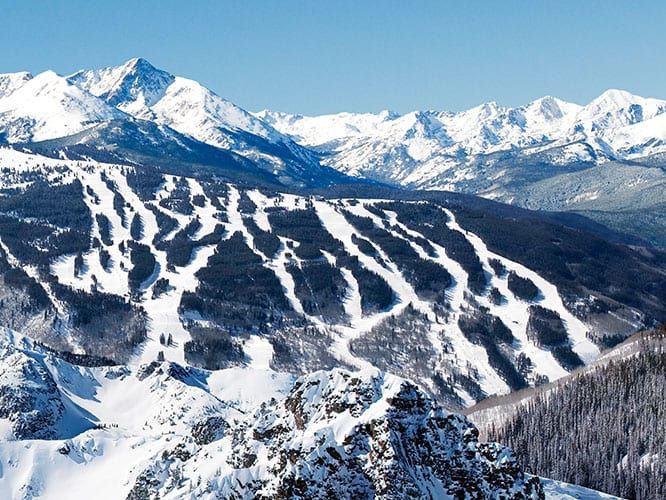
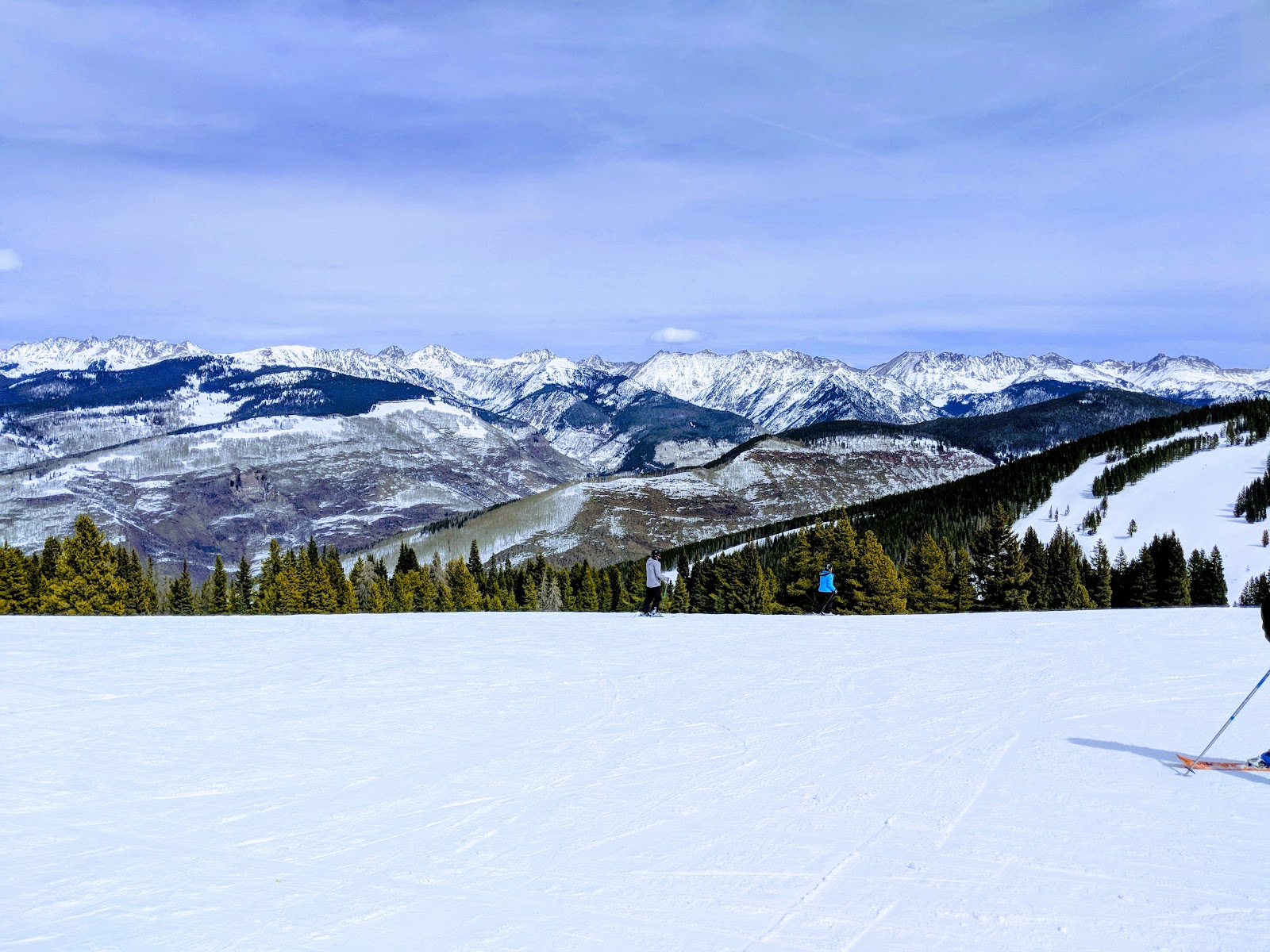
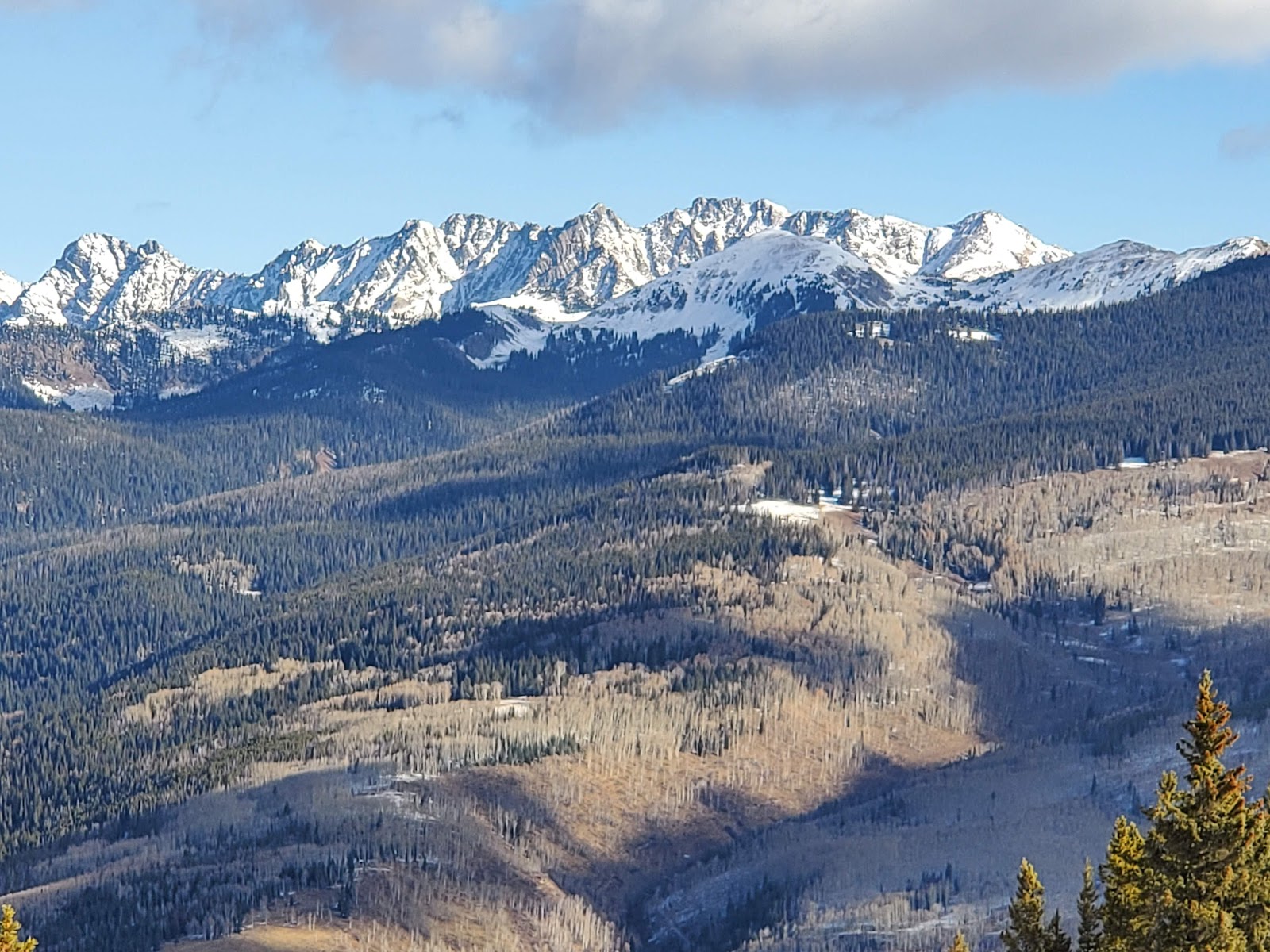
Photos via Google. Contributed by Andres, Marty Vettel, Randolfo Santos.
Who it suits
The skiing
Vail is the most complete big mountain in Colorado because it combines around 5,300 acres of terrain into a single, well connected resort that genuinely serves every ability. The front side is a vast playground of wide, immaculately groomed blues and gentle greens, ideal for families and intermediates, served by a fast and efficient lift system that moves big crowds well.
The Back Bowls are what make Vail legendary. Behind the front side lie thousands of acres of open, treeless powder bowls, lift served and accessible to any confident skier, that fill with light Colorado snow after a storm. Beyond them, Blue Sky Basin adds superb gladed tree skiing with a more remote, adventurous feel. On a powder day this combination is among the best inbounds skiing in North America.
The honest nuance for experts is that Vail is about scale and open terrain rather than extreme steeps. There are challenging lines, but a skier who lives for tight couloirs and big cliffs may find more at Jackson Hole or Snowbird. For almost everyone else, the variety and volume are hard to beat.
The village
Vail Village is a purpose built, Bavarian themed pedestrian center that has aged into one of the most polished resort bases in North America. It is car free, walkable and packed with hotels, restaurants, bars and shops, with a free bus connecting it to the second base area at Lionshead. The atmosphere is upscale and lively without being a hard party town.
Dining and apres ski are excellent but expensive, ranging from slope side patios to high end restaurants. The crowd is a mix of families, second home owners and destination visitors, and the overall feel is refined American resort luxury. If you want polish and convenience, Vail delivers.
The clear trade off is cost. Vail is one of the most expensive ski resorts in the world once you add lodging, dining and lift access, and the village does nothing to disguise its premium positioning. The Epic Pass is what makes the lift side affordable, but a Vail trip is a splurge by any measure.
Where to stay
Vail offers a wide range of lodging, from ski in ski out luxury hotels and residences to more affordable options a bus ride away in nearby towns like Avon and Eagle Vail. For the easiest access, stay in Vail Village or Lionshead near the gondolas. For better value, look down valley and use the efficient free bus and shuttle network.
Our overview of how to book a catered chalet covers what to check before you commit. If you want quotes for a Vail stay on your dates, use the short form here and we will route it to operators who know the resort.
Lift pass prices and how to save
Vail is the flagship of the Epic Pass, and the economics are simple: a walk up day pass can exceed $250, while an Epic Pass bought in advance covers Vail and many other resorts for a fraction of the per day cost. If you are skiing Vail for more than a couple of days, a season or multi day Epic product is almost always the right move. Buy well ahead of the season, as prices rise as winter approaches.
Read our Epic Pass explained guide before you buy, so you choose the right product for your trip.
Compare current prices and buy ahead through our lift pass partner.
Lessons and ski hire
Vail's ski and snowboard school is large and highly regarded, with strong children's programs and private instruction, which is part of what makes it such a good family mountain. Book lessons early for holiday weeks, as the best instructors and children's classes fill first. Reserve gear in advance too, and note the high altitude, as first timers should ease into day one.
Arrange lessons through our lessons partner and gear through our ski hire partner.
Getting there
Vail is one of the more accessible major US resorts. Denver International is roughly a 2 hour to 2 hour 30 minute drive west on Interstate 70, traffic permitting, while the smaller Eagle County airport is only around 45 minutes away and worth checking for direct seasonal flights. A shared or private shuttle from Denver is the usual approach, and a rental car is optional given the car free village and good local transit.
Book an airport transfer through our transfer partner, and sort cover through our travel insurance partner before you travel.
When to go
Vail's season runs roughly from mid November to mid April. For the best powder in the Back Bowls, aim for January and February, when the cold, dry Colorado snow is at its deepest. March brings longer days, softer spring conditions and often better value, while the Christmas and New Year holidays are the busiest and priciest weeks of all. Midweek visits help you avoid the heaviest crowds on the front side.
The honest bottom line
Vail earns its status as the most complete big mountain resort in Colorado, with vast intermediate terrain, the legendary Back Bowls and a polished, convenient village. For intermediates, families and advanced skiers who want scale and variety, and who plan to ski on an Epic Pass, it is one of the best all round choices in North America. Budget travelers paying walk up rates and skiers who prefer small, low key resorts should look elsewhere. For the right trip, it is worth the splurge.
If you want this trip priced by specialists, tell us your dates and budget below and we will route your brief to operators who know Vail.
Nearby alternatives
Staying in the area but want to compare? Consider Beaver Creek for a quieter, more refined sister resort nearby, Breckenridge for a historic town and high open terrain, and Aspen Snowmass for four mountains and Rocky Mountain glamour.
Common questions
What are the Back Bowls at Vail?
The Back Bowls are thousands of acres of open, treeless, lift served powder terrain behind Vail's front side. They are accessible to any confident skier and fill with light Colorado snow after a storm, and together with Blue Sky Basin they make Vail one of the best big mountains in North America on a powder day.
Do I need an Epic Pass to ski Vail?
You do not strictly need one, but you almost certainly want one. A walk up day pass at Vail can exceed $250, while an Epic Pass bought in advance covers Vail and many other resorts for a fraction of the per day cost. For more than a couple of days, an Epic product is the sensible choice.
Is Vail good for beginners and families?
Yes, very. Vail has extensive gentle and intermediate terrain, excellent ski schools and a car free village that is easy with children. Note the high base altitude of around 2,500 m, as some visitors feel the thin air and should ease into the first day.
How far is Vail from Denver airport?
Vail is roughly a 2 hour to 2 hour 30 minute drive west of Denver International on Interstate 70, traffic permitting. The smaller Eagle County airport is only around 45 minutes away and worth checking for seasonal direct flights.
Is Vail good for experts?
Yes, though it favors open bowls and trees over extreme steeps. The Back Bowls and Blue Sky Basin offer an enormous volume of advanced and expert terrain. A skier who lives for tight couloirs and cliffs might prefer Jackson Hole or Snowbird, but most experts will be very happy.
How much does a week at Vail cost?
Vail sits at the premium end. A week commonly lands in the $4,000 to $8,000 per person band once lodging, an Epic Pass, food and travel are included, and luxury trips run higher. Skiing on an Epic Pass rather than walk up tickets is the single biggest saving.