Skiing in February in Switzerland
February is the most reliable month to ski in Switzerland, pairing deep midwinter snow and the full lift network with the famous Swiss blue sky days, at the cost of peak season prices and the busiest weeks of the winter around the half term holidays.
Reviewed for the 2026 season by the Ski Resorts for Kings editorial team
What is the snow actually like in Switzerland in February?
February gives you the most dependable snow of the Swiss winter, with a deep settled base across the country and regular fresh falls topping it up. By the start of the month the early season storms have built a solid foundation, and February systems keep refreshing it, so cover is rarely a question above roughly 1,500 meters and the high, glacier linked resorts are at their generous best. This is the heart of the season, when even the lower villages tend to ski well from the door and the whole linked network is open rather than the partial early season map.
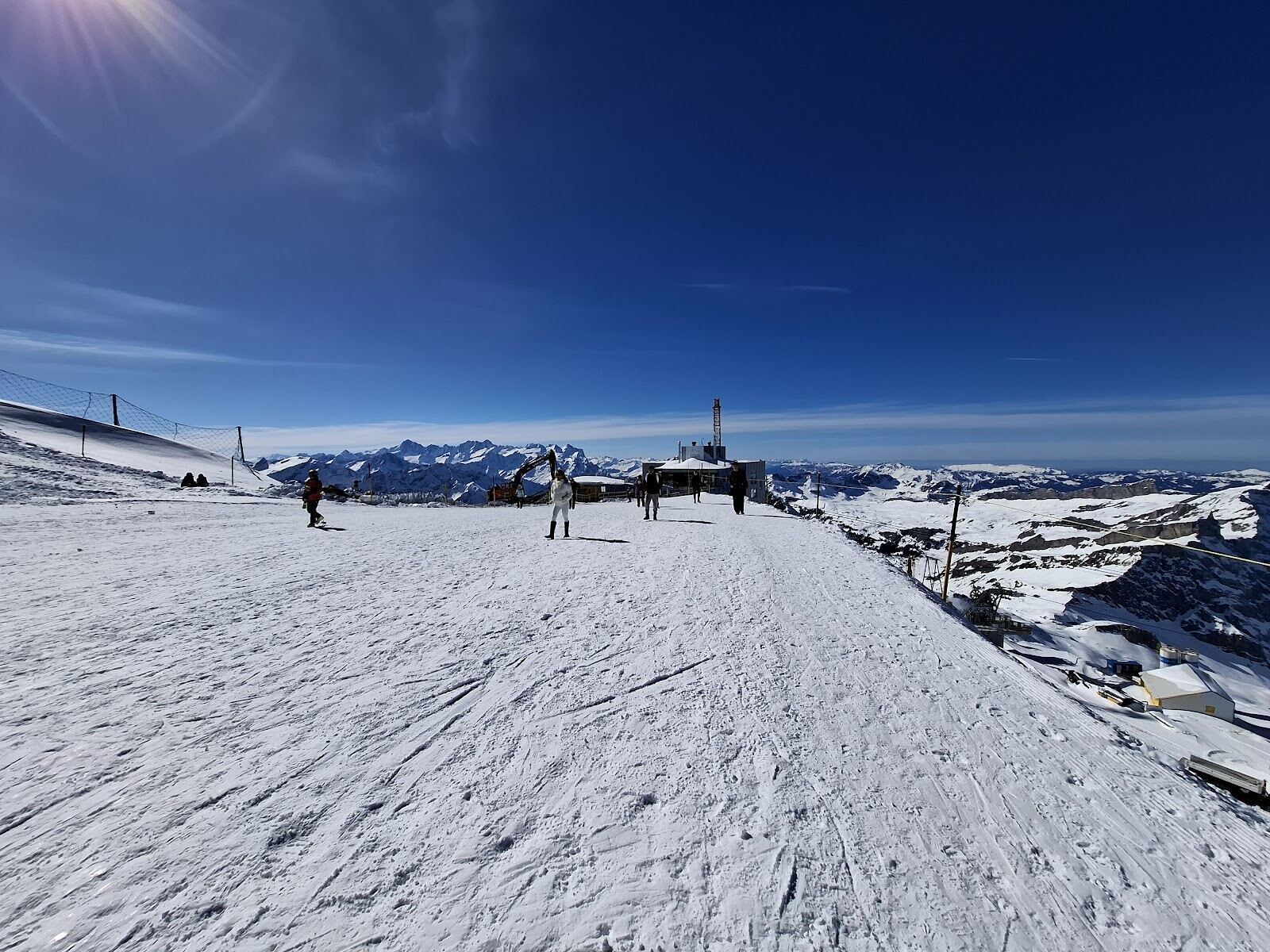
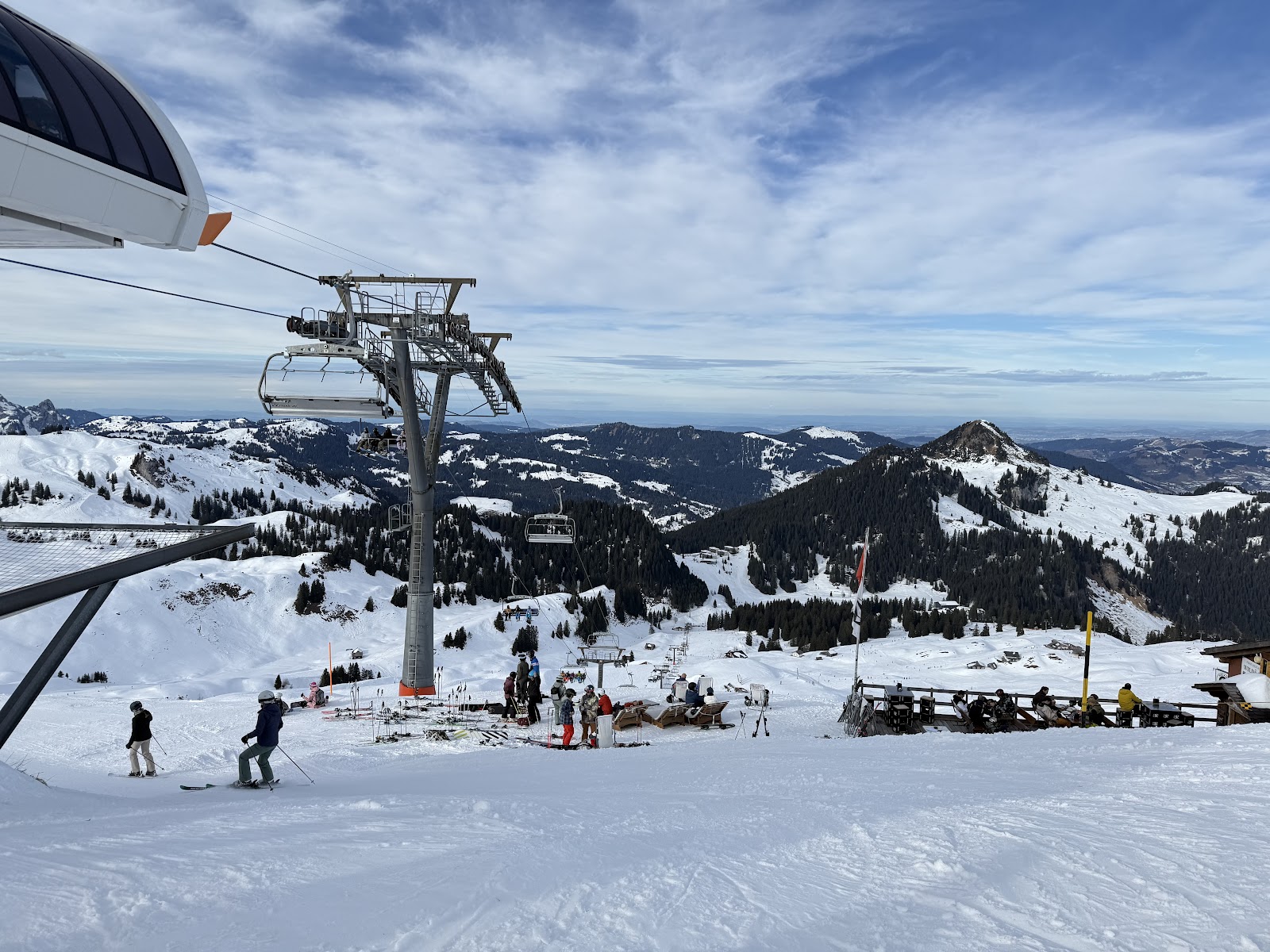
Switzerland's calling card in February is the combination of deep snow and clear, bright high pressure days. The country sits a touch drier and sunnier than the French side in many winters, so you often get the prized mix of a firm reliable base and blue sky skiing under the big peaks. The snow stays cold and dry through the short midwinter days, with summit temperatures frequently around minus 8C to minus 18C, so powder holds well on north facing slopes and the pistes stay fast. Pack proper layers and face cover for the high exposed chairlifts, because that same dry cold is genuinely sharp on the summits.
The honest caveat is that high pressure cuts both ways. A long settled spell brings the postcard blue skies but also hard pistes and thin fresh snow, and after a busy weekend the popular runs can get skied off by afternoon. When that happens the high altitude resorts with serious snowmaking and big north facing terrain are the safe bet, and a glance at the resort snow report before you commit your dates is always worth five minutes.
How busy is February, and which weeks should you avoid?
February is the busiest month of the Swiss season, driven by school half term holidays across Switzerland and its neighbors, plus the Swiss sport holidays that rotate through the month by canton. Those holiday weeks fill the marquee resorts, lengthen the queues at the headline lifts and push prices to their seasonal peak. Because the Swiss and European breaks are staggered, much of February runs hot, but the exact peak weeks shift from year to year and region to region.
If your dates are flexible, the move is to dodge the busiest holiday weeks and aim for the quieter windows that fall between them, often early February before the main breaks ramp up. You get the same deep midwinter snow and full lift network with noticeably fewer people and lower prices. Couples and groups without school age children should treat the holiday weeks as the ones to avoid, while families tied to those dates should book early, choose a larger resort that absorbs crowds better, and start skiing at first lift to beat the mid morning rush.
How much does a February ski trip to Switzerland cost?
Switzerland is the priciest of the major Alpine countries, and February is its peak, so budget accordingly. A week at a marquee Swiss resort during the half term holidays comfortably sits in the $4,000 to $8,000 per person band once flights, transfers, accommodation, lift passes and lessons are counted, and the very top resorts in the busiest weeks can push beyond $8,000 plus per person. Outside the holiday peak, a February week at a mid sized Swiss resort can ease toward the $2,000 to $4,000 per person band, though Switzerland rarely matches France or Austria on value.
The biggest lever is timing, not resort choice: shifting your week out of the half term peak saves more than switching resorts within Switzerland would. The second lever is the famously high on mountain cost of food, drink and incidentals, which adds up faster here than elsewhere in the Alps, so factor in mountain restaurant prices and a strong local currency. Book the lift pass, transfer and lessons ahead, as a six day adult pass at a large Swiss area is a serious line item on its own and the resort window price is rarely the cheapest.
Who should ski Switzerland in February, and who should wait?
February suits anyone whose first priority is snow certainty paired with classic Alpine scenery: powder seekers, blue sky chasers, and travelers who only get one trip a year and cannot risk thin cover. It rewards strong intermediates and experts who want the whole high linked network open and reliable, and it suits families tied to the school holidays, provided they accept peak prices and book a resort big enough to handle the crowds. If you want the quintessential Swiss postcard, deep snow under the Matterhorn or the Eiger with the lifts all running, February delivers it more dependably than any other month.
It suits the budget conscious less well. Switzerland in February is the dearest combination of country and month in the Alps, and anyone for whom price is the deciding factor will get far better value in March or in the non holiday weeks of January, or by choosing Austria. Nervous beginners and very young children may also prefer the softer, sunnier, longer days of March to the deep cold and short daylight of February. If certainty and scenery matter most, go now; if value or gentle learning conditions matter most, wait for spring.
February in Switzerland: the case for and against
| Why February works | What to weigh |
|---|---|
|
|
Where to ski in Switzerland in February
For February we would point you first at these, each with our full review:
- Zermatt. High, glacier linked and reliably snow sure under the Matterhorn, it is one of the safest February bets in any high pressure spell.
- Verbier. The vast 4 Vallees network skis big in February and suits adventurous intermediates and experts who want serious terrain.
- St Moritz. High, sunny and snow sure, it pairs reliable February cover with the bright blue sky days the Engadine is known for.
- Davos. A large high altitude area with extensive terrain that holds midwinter snow well and absorbs the half term crowds better than smaller resorts.
Sources we checked
Common questions
Is February a good time to ski in Switzerland?
Yes. February is the most reliable month to ski in Switzerland, with deep midwinter snow, the full lift network open and frequent blue sky days. The trade offs are peak season prices and the busiest weeks of the winter around the half term holidays.
Which weeks of February are busiest in Switzerland?
The half term and Swiss sport holiday weeks are busiest, and because they rotate by canton and country, much of February runs hot. If your dates are flexible, aim for the quieter windows between the breaks, often early February, for the same snow with fewer crowds.
How much does a week skiing Switzerland in February cost?
Expect $4,000 to $8,000 per person at a marquee resort during the half term peak, with the very top resorts pushing beyond $8,000 plus per person. Outside the holiday weeks, a mid sized resort can ease toward the $2,000 to $4,000 per person band.
Is the snow reliable in Switzerland in February?
Yes. February has the most dependable snow of the Swiss winter, with a deep settled base above roughly 1,500 meters and the high glacier linked resorts at their best. Long high pressure spells can harden pistes, so altitude and snowmaking are the safe choice.
Book the extras and save
Lift passes, airport transfers and lessons are where a trip quietly leaks money. Booking ahead almost always beats the resort window price.
Compare lift passesBook a transferFind lessonsReserve ski hireTravel insuranceTell us the dates. We price the trip.
Send one brief and vetted chalet companies and tour operators return tailored proposals. Flights, transfers, lift passes and lessons priced for your group. No fee to you, ever.