Val Thorens Ski Resort Review 2026
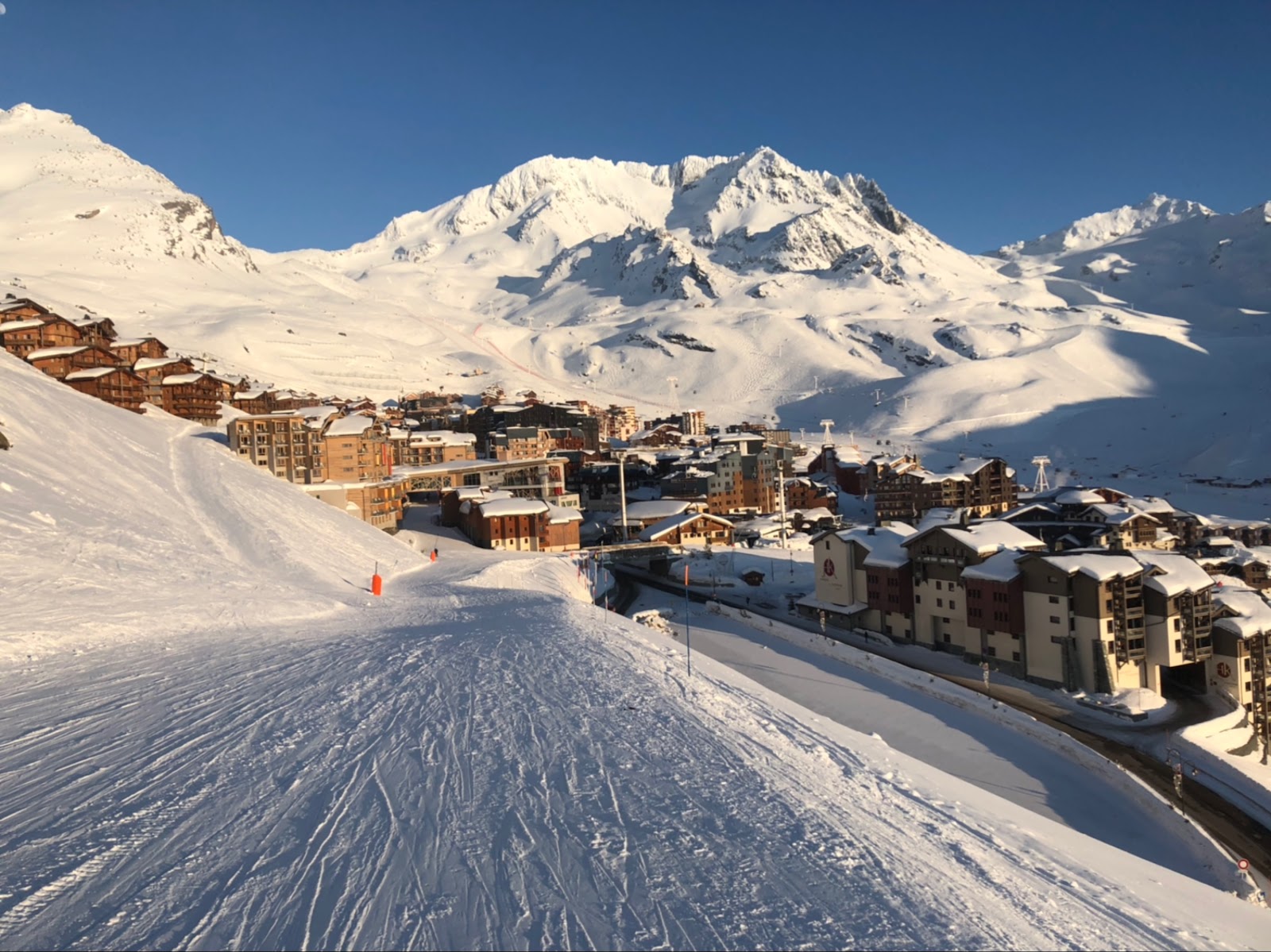
Val Thorens is the highest ski resort in Europe and the most snow sure in the Alps, which is the whole reason to book it. At around 2,300 m it opens in late November and skis into May, with ski in ski out convenience and a thumping apres scene on top of the vast Three Valleys. The trade off is honest: the purpose built village is functional rather than pretty, so you come here for reliable snow and energy, not Alpine charm.
Europe's highest resort, snow sure when nowhere else has it, and built for ski in ski out convenience and big apres.
Scored honestly
Val Thorens is at its best for intermediates and mixed groups. The high, open, well groomed terrain rewards mileage, and the Three Valleys link means stronger skiers in your party never run out of ground. It is a strong all rounder rather than a specialist resort.
Families are well served by the ski in ski out layout and gentle blue terrain near the village, though the resort is busy and lacks the cosy feel of a traditional village. Beginners have good nursery slopes and a long progression onto the wider area. Experts have plenty to enjoy with the off piste, the couloirs and the neighbouring valleys, even if Val Thorens is not as steep as Verbier or Chamonix. Non skiers get the least here, since the village is about the slopes and the bars rather than culture or scenery.
Terrain by ability
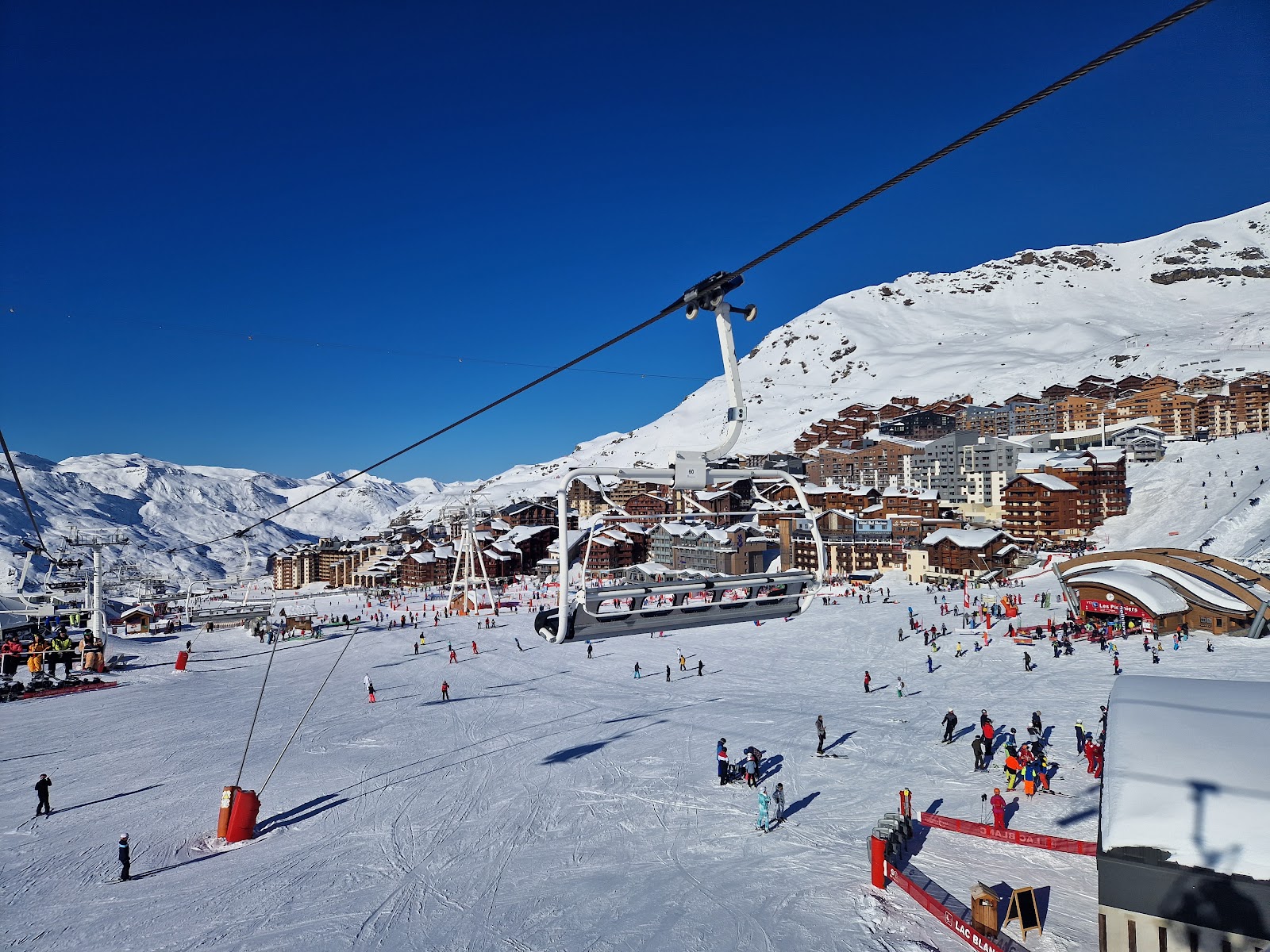
The skiing is high, snow sure and largely above the tree line, a wide white amphitheatre of blues and reds that suits confident intermediates perfectly. From the village you can drop straight onto gentle terrain or ride up toward the Cime Caron and the glacier for bigger views and longer descents.
Beginners learn on accessible nursery areas and progress onto easy blues without needing a bus. Intermediates get the headline experience, cruising endlessly across the Belleville valley and over into Meribel and Courchevel. Experts will want to explore the off piste, the steeper black terrain and the linked valleys, and a guide opens up serious freeride days. Because everything is so high, the snow stays good far longer into the season than at lower resorts.
Charm, convenience and evenings
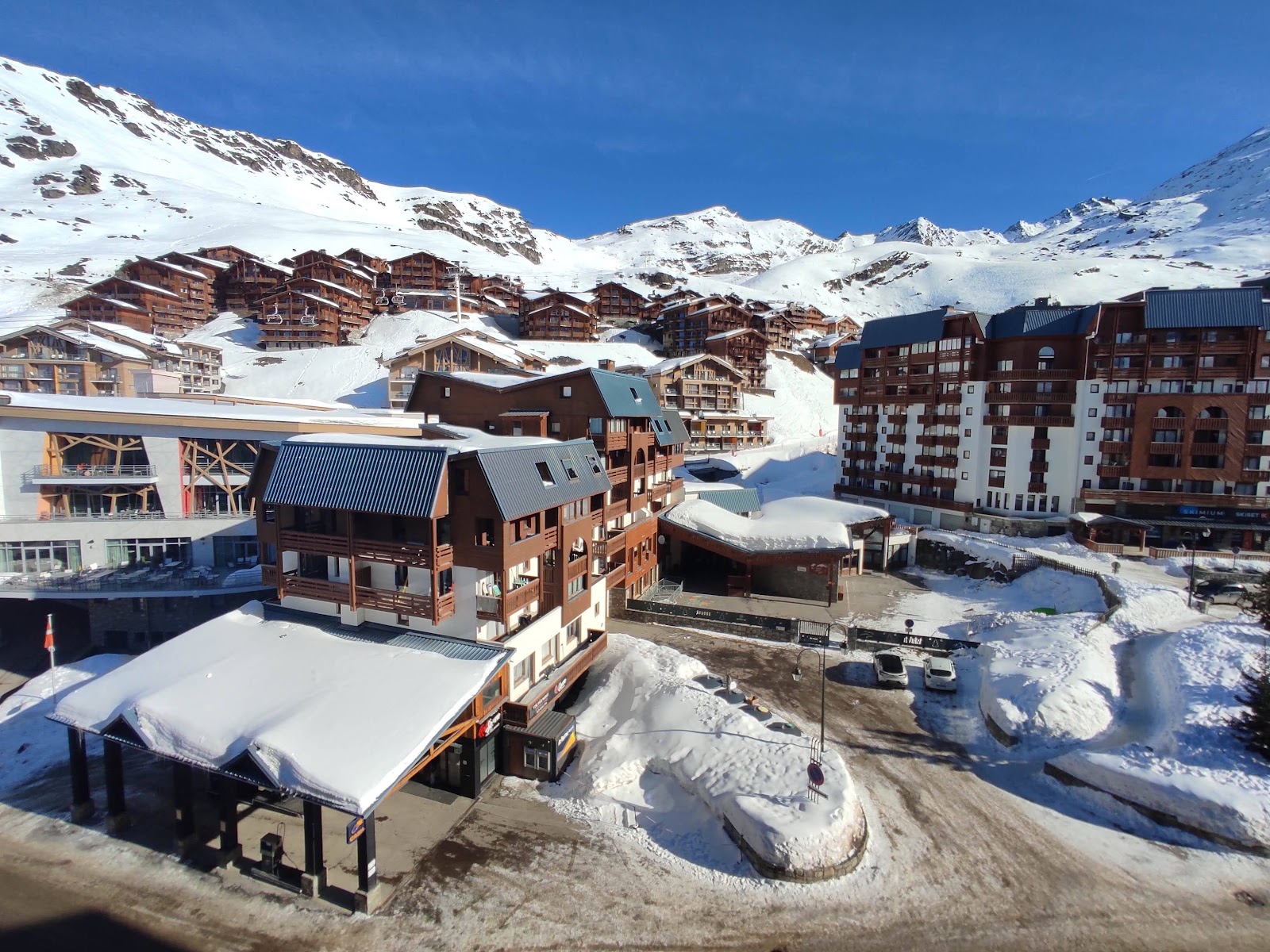
Let us be straight: Val Thorens is purpose built and it shows. The architecture is modern and functional rather than pretty, and at peak weeks it is busy. What you get in return is unbeatable convenience, almost everywhere is a short walk or a ski away, and you never need a car or a morning bus.
The evenings are a real draw. Val Thorens has one of the biggest apres scenes in the Alps, from slope side terraces in the afternoon to late bars and clubs after dark. There is a good spread of restaurants and a wellness and activity offer, including a high altitude spa and tubing, that fills the gaps for non skiers. It is energetic and sociable rather than refined.
Chalets and ski in ski out beds
Val Thorens is rich in ski in ski out apartments and catered chalets, with a growing band of genuinely high end properties and a few five star hotels at the top of the market. For the best of the resort, aim for accommodation close to the central Place Caron or with true ski to the door access, which is the whole point of staying this high.
Tell us your dates and group and we will get tailored chalet quotes back to you from vetted operators.
Free and no obligation. Your brief goes to vetted operators only, never to advertisers.
What a pass costs
A Val Thorens and Orelle area day pass runs around $65, while the full Three Valleys pass is roughly $75 a day, both with much better value over six days. For a first week most skiers find the local Belleville valley pass plenty, upgrading to the full area on the days they want to roam. Booking the pass before you arrive almost always beats the resort window price.
Book the extras and save
Lift passes, transfers, lessons, ski hire and insurance are where a trip quietly leaks money. Booking ahead almost always beats the resort window price.
Compare lift passesBook a transferFind lessonsReserve ski hireTravel insuranceSchools and kit
Val Thorens has a strong choice of ski schools with reliable English lessons for adults and children, plus specialist freeride and off piste guiding for stronger skiers. Ski hire is plentiful in the village, and reserving online before you travel is usually cheaper and saves queueing on day one. For a high resort like this, make sure your hire includes goggles and decent gloves, the weather can be properly cold.
Lessons and ski hire
Book lessons and kit ahead for the best instructors and the lowest rates.
Find lessonsReserve ski hireThe journey
Geneva is the main gateway, roughly a 3 hour transfer by road, with Lyon, Chambery and Grenoble as alternatives. The final climb up to 2,300 m is a long, winding mountain road, so a booked transfer or a confident driver with winter tyres is the comfortable way to arrive. Because Val Thorens is so high, the drive is the one part of the trip worth planning carefully.
Airport transfers
Pre booked shared and private transfers from Geneva and Lyon are usually cheaper and smoother than arranging it on arrival.
Book a transferTiming your trip
Val Thorens has one of the longest seasons in the Alps, opening in late November and running into early May. For the most reliable snow and quieter slopes, target early December or the weeks after the New Year peak. February holiday weeks are superb for snow but the busiest and dearest. Late season, March and April, gives long sunny days with snow that still holds up thanks to the altitude, and is our pick for value.
Val Thorens FAQs
Is Val Thorens good for beginners?
Yes. Val Thorens has accessible nursery slopes and gentle blue runs near the village, plus ski in ski out convenience that keeps walking to a minimum. The snow is reliable, which helps first timers, though the resort is busy and the wider area is best enjoyed once you can link turns.
Why is Val Thorens so snow sure?
Val Thorens is the highest ski resort in Europe at around 2,300 m, with a top lift near 3,200 m and a glacier. That altitude keeps the snow cold and reliable from late November into May, far longer than lower resorts can manage.
Is Val Thorens part of the Three Valleys?
Yes. Val Thorens sits at the top of Les Trois Vallees, the largest linked ski area in the world at around 600 km of pistes, with direct access over to Meribel and Courchevel on one lift pass.
How much does a Val Thorens lift pass cost?
A local Belleville area day pass runs around 65 US dollars, and the full Three Valleys pass around 75 US dollars a day, both cheaper per day over six days. Many skiers buy the local pass and upgrade only on the days they want the whole area.
How do I get to Val Thorens?
Geneva is the usual gateway, roughly a 3 hour transfer, with Lyon, Chambery and Grenoble as alternatives. The final road climbs to 2,300 m, so a pre booked transfer or winter ready car is the comfortable choice.
Is Val Thorens good for apres ski?
Very. Val Thorens has one of the biggest apres scenes in the Alps, from sunny slope side terraces in the afternoon to lively bars and clubs after dark. It is one of the main reasons sociable groups choose it.
Is Val Thorens worth it for non skiers?
Less so than charming traditional resorts. Val Thorens is built around the slopes and the bars rather than culture or scenery, though a high altitude spa, tubing and mountain restaurants give non skiers something to do. Cortina or Megeve suit non skiers better.
If Val Thorens is not quite right
All three sit in the same Three Valleys on the same lift pass, so you keep the giant ski area while changing the feel of your base.
Meribel
The pretty, central chalet heartland of the Three Valleys, better for charm and family weeks.
Courchevel
The most gilded village in skiing, with the best beginner terrain and finest dining.
Les Menuires
The value play in the Belleville valley, improving fast and well placed for the whole area.
See the full Les Trois Vallees region guide or the wider France guide for more options.
Where should you stay and when should you go?
Prefer a village bed to staying in the main base? Read our village guides to Courchevel, Les Menuires, Meribel and Saint Martin de Belleville for beds, transfers and who each one suits. For month by month snow, crowds and prices in France, see skiing in France in December, January, February, March, April.
Tell us the dates. We price the trip.
If you want a Val Thorens trip priced by specialists, give us the dates and budget below. Send one brief and our partner chalet companies and tour operators return tailored proposals covering flights, transfers, lift passes and lessons. No fee to you, ever.
Every brief is read by a real planner. You will hear back within two working days, in season.
By the Ski Resorts for Kings editorial team · Last reviewed May 2026. We update season dates and prices each year.